Wednesday, August 31, 2011

Thoughts on the DCnU

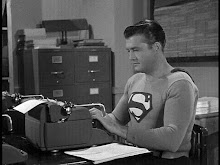
Sitting on the couch next to me is a signed copy of Justice League #1, the first comic book released by DC Comics as a part of their company-wide relaunch. If you haven't heard, DC has completely re-branded their line of comic books, starting every series over with a new #1 issue. Many characters (Superman included) are getting an all-new backstory, history, costume, everything. They are hoping to reinvigorate their comics, as well as grab new readers. And in a post in May, I laid out the circumstances that would bring me back to monthly comics. In that post, I challenged DC to put out something that I wanted to buy, and now they have. So I am there. I subscribed to my books today at my local LCS.

And now, with the first step of the DCnU in my hands but still unread, I'm still excited. Are there some press releases that make me nervous? Yes. Do I think I might be switching to the trade paperbacks in a year? Maybe. But do I think they have "ruined" Superman with this move? Not at all. Comics are a fluid medium, and the Superman from two years ago bears almost no resemblance to the Superman from the 1940s. So the changes don't really scare me. I'm ready for them. Hell, I'll even buy the action figure! (That costume is growing on me...)

What I'm worried about are the stories. If they are good stories, well-told and captivating, then I will be a part of the series. If the stories aren't compelling, then this will seem like a publicity stunt to attract attention. If the writers and creators use this opportunity to capture a new spirit of adventure, it will be perfect. But with Geoff Johns involved, I'm afraid that the "new" universe is going to be largely derivative of the old one. But if these stories and books keep the feel of the characters while giving them a whole new coat of paint, I'm in. To me, at this point in DC history, the worst thing for these books would be if they merely recycle the old material and try to pass it off as something new.

Well, time to break the book out and see which way the nU goes....

Sunday, August 21, 2011

Carte Blanche: The new James Bond novel

Carte Blanche: 007
Jeffery Deaver
Simon and Schuster, 2011

Since I now work for a publishing house, I want to start including books reviews and discussions on this blog as well as movie and theatre reviews. Those posts will continue for sure, but I'm also branching out and tackling fiction, non-fiction, comic books, and whatever else I get around to reading and writing about. First up, a recent release that I received while I was studying at NYU. I didn't get a chance to read it until the program ended, but I'm glad I made the time to sit on the couch, drink a beer, and read this new Bond novel. "Reboot" has become a dirty word when referring to recent films, but this is an excellent "reboot" of the literary James Bond.

Things that worked perfectly:
  • Echoes of Film Bond. Deaver's story would fit perfectly into the list of James Bond films. The story takes Bond to exotic locations, involves three beautiful Bond women, a diabolical villain with a real-world plot, and a psychotic henchmen. Action sequences were drawn right from the second unit team, and even John Barry's scores were running through my head as I read them. In fact, Deaver draws so much from the film Bond tradition that he even includes the next bullet point.
  • A pre-title sequence! The book actually starts focused on other characters, including the engineer of a locomotive through the countryside. We're introduced to Bond a few short chapters in, when he is involved in a shootout, the destruction of the aforementioned locomotive, and a car chase across the countryside. I could almost hear the title song kick up, and I loved it.
  • Echoes of Book Bond. As much as Deaver connects to the cinematic Bond history, he also has his feet planted in Fleming's tradition as well. From the description of Bond's eyes and the lock of hair that falls over his eyes to Bond's occasional melancholy and genuine sadness, Deaver knows his Fleming history. It's great to see such a wonderful blend of the two elements of Bond's history.
Things that worked out okay:
  • Bond's new backstory. Drawing on the backstory of the literary Bond, Deaver brings back the idea that Bond is an orphan whose parents were killed in a ski accident when he was a boy. I thought it was going to originally stay as backstory, but Deaver expands on it and starts creating an intrigue-laden story for Bond's parents that is more than Fleming ever intended. It is an interesting idea, and I like the attempt to make this more of a modern thriller than Fleming's books. It comes off as a little obvious, although Deaver does include a twist on it that makes it more interesting that just the cliche.
  • Pacing. I love books with short chapters. I don't know why, but the chapters come across like popcorn and it's almost impossible to stop reading. Deaver uses this technique really well during the action scenes, but it's one of the those styles that can't help but call attention to itself. In short, it works really well, but there are small places where it feels forced.
Things that didn't work so well:
  • Nothing. Literally, nothing. There are some pieces that don't work as well as others, but no element fell flat on its face. That surprised me, but my standards for books are much more flexible than for films.
Overall:

This is a very enjoyable book. I grew up watching the Bond films, and I read all of Ian Fleming's original novels. "Carte Blanche" is a great way to update the Bond series and bring 007 into the 21st century, and there are even rumors that this book might form the basis of the next Daniel Craig film. I'd be all about that, especially since this book is a lot better than Quantum of Solace. Ultimately, I was up late at night reading as much of the book as I could, and that is the best recommendation I can give it.

Saturday, August 20, 2011

"Captain America: The First Avenger"

"Captain America"
A review, in bullet-points

Before I headed into the theatre, the only thing I knew about Captain America was that there would be trouble when Captain America throws his mighty shield. I didn't know exactly what that trouble was, but anyone who throws a shield at me is going to get me to yield rather quickly. I'm a little late to the party where this movie is concerned, but since it was directed by Joe Johnston, who also directed The Rocketeer, I was on board for some old-fashioned action adventure fun. And I didn't know how right I would be!

Things I loved:
  • The action. The action sequences were amazing. They were realistic (for the most part), exciting, and seeing Cap throw his shield was worth the price of admission. The first sequence after he becomes the super soldier is incredible, and he's not even wearing the uniform yet.
  • Chris Evans. I wasn't sure that Evans was a good choice for Cap, but he won me over almost immediately. I quickly forgot that I was watching the star of other films, and I only saw him as Captain America. The haircut and the overall styling helped a lot as well. The computer effects to make him smaller were mostly convincing, too, and although it sometimes looked like a strange bobblehead, it always felt like the same character.
  • The script. For the most part, the pacing of this movie was dead-on. There was enough character development that made it clear why Steve becomes Captain America, and there were good comedy beats exactly where we needed them. And perhaps most importantly, there were no characters that existed only to be ciphers and provide backstory or plot development. Very well structured, very well written.
  • The old-fashioned style of film-making. Aside from the visual effects, this film felt like it could have been made twenty-years ago. There is no shaky-cam, no lens-flare, no quick-cuts, all elements of modern cinema that drive me crazy. Instead, Johnston uses long tracking shots, wide pans, giving the film the feeling of a much older, more "classic" Hollywood. Not only does it mirror the 1940s setting, but it makes it that much more exciting for me.
Things I liked less than I expected:
  • The costume. When the first few photos of the movie costume came out, I was really excited. I thought it was really cool. I liked how it combined the comic book design with the reality of WWII-era uniforms. But unfortunately, it didn't look as good in motion due to bizarrely padded shoulders and a strange helmet that didn't look as good as his USO look.
  • Hugo Weaving as Red Skull. In the opening scenes of the movie, Weaving is understated, subtle, and truly creepy. But as the the film continues, not only does his performance become downright mustache-twirling, but his accent starts approaching "moose and squirrel" territory. Maybe it was the Halloween mask they made him wear.
The less-would-have-been-more file:
  • Montage, times two. It's strange to see a montage in a film these days. And this movie has two of them. Both of them fit the story, do a good job of showing the passage of time, and contain a lot of exciting imagery. However, both of the montages were a little long and they robbed the film of some momentum.
  • The love story. I don't know why every superhero movie needs to have a love story, especially when it feels tacked-on in movies like this, Thor, Iron Man 2, and The Dark Knight. It gives the opportunity for some jokes, some intentionally tender script moments, but overall it felt tacked-on by the marketing and publicity department.
Things that seemed on-loan from another movie:
  • The timeline. Captain America is a hero from WWII. And according to the comic books, he somehow winds up in the present day, as a part of the team that includes Hulk and Iron Man. But the pieces of this story are thrown into this movie is such a strange way that I don't see how you could understand it unless you already knew the character's comic history. It felt like they should have saved it for The Avengers movie next summer.
  • Samuel L. Jackson. I'm sorry, fans of Marvel Comics, The Avengers, and Mr. Jackson in general. He is completely out of place in these movies. He's there just for fan service, and when it comes to acting, he's not even trying. Reminds me of his comically awkward turns in the Star Wars prequels. This movie (and maybe the entire Marvel movie universe) would be better if they deleted Nick Fury and replaced him with the wonderful Agent Coulson.
Overall:

I loved this movie. Loved, loved, loved this movie. I wish that all movies were this good. Does it have some problems? Sure, of course it does. Almost every movie does. There are places where the film bogs down in the love story, or where the pace feels a little off. But if more movies were made like this, I would not complain.

Monday, August 1, 2011

Book Guilt

Now that I am an aspiring professional in the publishing industry, I receive several newsletters discussing the state and future of the business. The recent issue of one of them contained a link to this story, in which Bethanne Patrick discusses her recent guilt over vulturing the sale tables at Borders liquidation sales. I know that I'm guilty of this as well, as I've been wandering past those stores much too often looking to see if they've offered any new discounts since I was there two days ago. (Usually not.)

Patrick questions how much we can possibly value books, if we are willing to do so much to avoid paying for them. I know I am also guilty of this little problem, choosing to purchase books online or in used condition rather than pay full-price for them. I have shelves and shelves of books that I bought a library book sale (3/$1) that I've never read, nor never plan to read. And so reading this article made me think about my own book-buying habits. Maybe I can take her advice and give up the latte to buy a trade paperback. I know I'll make the sacrifice necessary to pick up some comic books in September, so I'm sure magazines and new books are worth my money too. Once I have the income to spread around, I'm looking forward to using that money to support the things I enjoy. The hosts of the very entertaining movie podcast "Better in the Dark" always encourage people to vote with their dollars, and I will do the same. As soon as I have some dollars.

Wednesday, July 27, 2011

A luxury item after all

Okay, so I posted a few days ago about the emergence of books as a new luxury item. I shared the fact that I grew up in a household that was covered in books. I literally have boxes and boxes of books in my childhood bedroom and my parent's attic, including a box each for Star Wars novels and Star Trek novels. My book collection has expanded over several bookshelves, and I never thought of books as luxury items. Sure, I would buy every book in certain series, and I always loved it when the series had a consistent design so that all the books look the same. I have that borderline OCD that wants everything to fit together on my shelf. (I have a huge love/hate relationship with the snapcase vs keepcase issue in my DVD collection.)
But now this post takes a left-hand turn; I might even backtrack over my old position. I just read Carte Blanche by Jeffery Deaver, the newest James Bond novel. I enjoyed it so much I wanted to backtrack and find a copy of the previous Bond novel, Devil May Care. I had it in my head that I would go pick up a paperback copy of the book, but then I saw the hardcover for sale. And it looked like this:
Now, that is an attractive book design. And when I saw it, I appreciated the cover, the image, the logos, and even the way that the black-clad figure (presumably James Bond) wraps around the spine and continues onto the back cover. The back cover (not pictured) has a large quote from the novel, in which M welcomes 007 back to active duty. It's such an attractive book, especially with the dust jacket over the black book, and it will look great on the bookshelves. I specifically chose to buy the book in hardcover, so I guess that books might be a luxury item after all.

Of course, since I'm still unemployed, I did not drop the money on this pretty hardcover.
I'll wait for the paperback to show up on the sale shelf.

Thursday, July 21, 2011

Books - The New Luxury Item

A recent guest speaker talked about the love of physical objects as it related to books. The printed, bound book is a work of art, and people like having them on their shelves. And this particular industry expert does not believe that print books are going to disappear anytime soon. In fact, no one is really expecting the printed book to completely vanish and be replaced by ebooks, but this speaker was very optimistic. "People will always want books," he said, "they are the next big luxury item."

Um.....excuse me? Luxury item? .....books?
Books!? I grew up in a house that has piles of books in every room. Even the kitchen was usually overrun by books that us kids were carrying around and leaving all over the place, usually leading my father to innocently pick them up and ask a series of questions instead of reading the cover copy. My parents were also one of the first people to jump on this new online retailer called Amazon.com, and we still have a magnet on our fridge that features the first logo for the online giant. So for someone who grew up surrounded by piles and piles of books of all different shapes, sizes, and colors, the idea of the book becoming a luxury item is a strange one. It's just as strange as thinking that the mass market paperback is doomed, or that Borders Bookstore is going to close forever. But both of them are probably just as true, and I'm not entirely sure how I feel about it.

Monday, July 4, 2011

"X-Men: First Class"

X-Men: First Class
A review, done in bullet-points

I'll confess - I'm not a huge fan of the X-Men comic book properties. My first real exposure to the mutants was with the first Bryan Singer film, and I moved outward from there, picking up the classic 90s animated series and some trade paperbacks which collected some of the major storylines. I was also a fan of the uncanny series written for a time by Joss Whedon, and I saw the rest of the films in the theatre. So I'm not as fully versed in the X-canon as I am with the Super-canon, so these comments will reflect that quote-unquote bias. I'm also not going to attempt to post a comprehensive review of the film. That territory has already been well-covered by Superhero Hype, The Guardian, The Hollywood Reporter, Pajiba.com, and the New York Times, and I don't really have the time to say all of their comments again. So instead I will focus my thoughts in convenient bullet point format and run quickly through some of my major thoughts on this film.


What I loved:
  • The design and style. It was like a 1960s James Bond movie done with a budget and scale to rival modern blockbusters. It was a period piece, and they even replicated some of the filmmaking styles of the 60s. A training montage halfway through the film is amazing.
  • Professor X and Magneto. James McAvoy and Michael Fassbender steal the show. They are great together, and they steal the scenes they are in. Fassbender has a little more to do and a much broader arc, but both of them knock it out of the park.
  • Flight effects. As a Superman-fan, I am a sharp critic of flying on film. I never think it looks realistic. But the scenes of Banshee flying in this movie are some of the best that have ever been done. Very realistic, yet without obvious use of computer generated imagery.
  • The scope, but without the "origin-sickness." This one will take a second to explain. In many superhero franchises, the first film suffers from "origin sickness," taking a lot of time to develop and explain the backstory of the hero, showing the process by which the hero develops. But that often means that the first hour of the movie is dedicated to slow-moving development before the more interesting part begins. And First Class avoids that problem really well. I don't know if it's the genius of the screenwriting or the fact that the script banks on knowledge of previous X-films, but it works really well.
What I didn't love as much:
  • Emma Frost, and to some extent, Mystique. This film continues the tradition of the X-men film franchise of having excellent leading men and adequate leading women. Much has already been written about January Jones, but even Jennifer Lawrence's Mystique isn't compelling. Maybe it's because the majority of her scenes
  • Comic book tropes. The characters at one point come up with their own code names. Without missing a beat, they automatically pick the ones established by the comic books, including esoteric names like "Professor X." Where did that name come from, other than the fact that the comic books said so? When Hugh Jackman called him "Wheels" in the first movie, that felt authentic. These "code names" just felt forced.
  • Cameos. Well, one cameo in particular that was set in a bar, featuring a certain mutant that we all know from the previous films. He was played by the same actor as the original films, and I know I am in the minority that this cameo actually took me out of the movie. It was distracting to see the original actor in the new franchise films. It would be like having Leonard Nimoy is a Star Trek movie featuring a brand-new crew. Oh wait...
  • Confusion over the next step. Is this film a stand-alone prequel, or is it the first step in another trilogy to link up with the original film? If it was the first, then things weren't complex enough for me to jump over the 35-year-gap to get to the next film. Aside from the main characters aging, it seems like it should happen tomorrow. But if we're being set up for a sequel, then things were wrapped up a little too neatly
Overall:

This is one of the best superhero films I've ever seen. Despite having some problems here and there with continuity, it makes me want to see another one. Now I'm just hoping that Captain America is that good.